Letting Your Property With Us
Claytons is a long-established lettings and management agent dealing solely with quality residential property and professional tenants in and around Watford for more than 30 years.

Claytons is a long-established lettings and management agent dealing solely with quality residential property and professional tenants in and around Watford for more than 30 years.
We understand that the letting and management of property is not something that can be learned overnight and our collective experience means we have in-depth understanding of the local market. At a time when there are more agencies than ever to choose from, we can guarantee that should you appoint us as your agents, you will benefit from this experience.

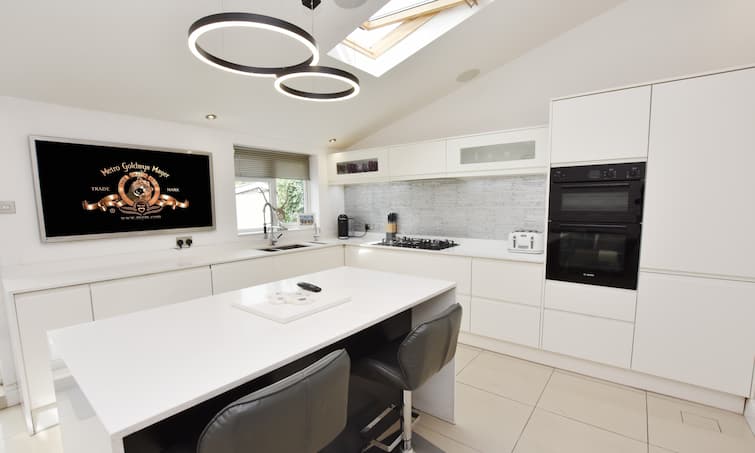
If you are thinking of letting your property or if you want to check if you are receiving the best rent from your let you can get an instant valuation from us today.
Alternatively one of our property experts can give you a more accurate valaution at a time that is convenient to you.
With so much to consider Claytons will take the time to assist you, from the start by providing honest and reliable advice on potential investment opportunities. We recognise that this is likely to be your second biggest investment, after buying your own home, and whether you are a first time Landlord or an experienced investor, you can trust our guidance.

Preparing Your House For Letting
Mortgages: Where the property to be let is subject to a mortgage, permission to do so may be required from the mortgage provider. You should obtain your mortgage provider’s permission to let the property and be aware that they may charge a fee or even increase the interest rates they charge you. If required, we will be very happy to recommend mortgage brokers to you.
Insurance: It is essential that the property and your contents are adequately insured, both while the property is empty, and while it is let. Your insurers must be told that the property is to be let and failure to do so may invalidate your cover. We can provide details of insurance advisors specialising in cover for rented property who will be happy to provide you with a quote.
Security systems (locks on windows and external doors, lights and even full alarm systems) are often taken into consideration by all the leading insurance companies when calculating the premiums.
Empty properties: It is important that you comply with any insurance requirements during vacant periods. Remember to ensure that when your property is empty or unoccupied during cold spells that the water system is either drained down or the heating is left on ‘tickover’.
Our Standard Letting and Management Services do not include the supervision of empty properties. Should you instruct us to do so, we shall inspect the property at agreed intervals whilst vacant, to ensure there are no obvious defects, or irregularities. These inspections should not be relied on to pick up any structural defects and we cannot be responsible for any hidden or latent defects.
Decorations and carpets: We recommend that properties should be newly decorated, ideally in neutral colours. Higher-quality properties will always attract a better quality tenant and so it is vital that your property is presented well enough to meet the expectations of a discerning potential tenant.
Unfurnished or furnished? Interestingly it makes no real difference to the demand/rent ability or indeed rental value, if a property is offered furnished, part furnished or unfurnished. Unfurnished property will traditionally include just carpets, curtains and white goods.This also suits landlords who avoid becoming responsible for furniture and the annual testing and maintenance of electrical appliances.
Domestic appliances: These should also be of good quality and condition and subject to regular servicing. It is important that full instructions for use are left on the premises to avoid the need to call in an engineer to demonstrate. Gas and electrical appliances must meet legal safety requirements and gas appliances must be tested annually.
Cleaning: It is essential that the property be handed over in clean condition. We recommend that the property be professionally cleaned throughout, including all carpets. This creates a benchmark that will be recorded in the Inventory and Schedule of Condition Report and will allow us to maintain a high standard through subsequent tenancies. We can provide the names of reputable and economical cleaning contractors.
Gardens: The gardens should be left in good seasonal order as tenants will be responsible for its maintenance and upkeep. Ideally some gardening equipment should be left to make it easier to for the tenants to fulfill their obligations. However, some landlords will provide a gardening service, particularly if the garden is large or complicated to look after. We are happy to help find suitable gardeners, either for a full maintenance service, or for hedge cutting and pruning or a general tidy. (Managed Service Only)
Gas, Electricity and Water: These services should be left connected and we will require a list of who your service providers are. Under the Housing Health and Safety Ruling System, tenants must be able to control and regulate heating systems.
Keys: A complete key set should be provided for every person listed on the Tenancy Agreement plus one complete set for the Agent if the property is managed.
Useful information: It is extremely helpful to your tenants if you are able to leave a manual/folder in the rental property containing useful information regarding the property and area. For example, such information could include bin collection days, where to locate the stopcock, instruction manuals for appliances, local doctors’ contact numbers, bus time tables etc. Another nice touch is to leave some basic essentials for your new tenants which may include milk, tea, coffee or even a bottle of wine!
Regulations & Important Information
Safety regulations and precautions: Failure to comply with the following safety regulations may constitute a criminal office under the Consumer Protection Act 1987 and could lead to a fine or imprisonment or both. In any case, landlords have a duty of care under common law to ensure that rented property is kept in a safe condition. It is therefore essential to examine the property and its contents closely before letting.
Housing Health and Safety Rating System (HHSRS): The Housing Health and Safety Rating System was introduced under the 2004 Housing Act. It is a risk-based evaluation tool, designed to identify potential hazards to health and safety from any deficiencies indentified in dwellings. Common breaches of this legislation include a lack of extractor fans in bathrooms and kitchens, trip hazards such as uneven patio slabs, loosely fitted carpets and staircases without handrails.
Fire and Furnishing regulations: Under the Furniture and Furnishings (Fire & Safety) Regulations 1988 (as amended) a landlord who is letting a property in the course of business, is responsible for seeing that the furniture carries appropriate fire-resistant labels. Bedding, carpets and curtains and furniture manufactured before 1950, fall outside the regulations.
Electricity: The Electrical Equipment (Safety) Regulations 1994 state that all electrical appliances, both fixed and portable, in rented accommodation must be safe. The only safe method of checking this is to have them all tested and labelled periodically by a qualified electrician with the appropriate Portable Appliance Testing (PAT) equipment.It is now a legal requirement that all tenancies which begin on or after 1st July 2020 must have a 5 year electrical safety certificate and that a copy of the certificate MUST be given to the tenant within 28 days of commencement of tenancy. You must also provide a copy to the local authority (if they ask for one) within 7 days
Gas Safety Regulations for Landlords and Agents: (Statutory Instrument No. 1886 of 1994 Health & Safety – Gas Safety (installation and use) Regulations 1994 (as amended). From October 31, 1994, it became law for gas equipment in rented properties to be serviced and safety checked before a Tenancy, and then annually by a registered installer and for landlords or their agents to keep accurate records of work carried out on all appliances in their control, confirmed by an official safety certificate. It is a legal requirement that we ensure that a Gas Safety Certificate is provided to the tenant annually.
This of course, includes all gas appliances like cookers, fires and flues as well as boilers and water heaters. Landlords are reminded that only British Gas or Gas Safe registered plumbers should carry out this work. We would stress that it is desirable to leave all gas appliances with service contracts in place.
Smoke Detectors and Carbon Monoxide Alarms: The Department of the Environment has regulations governing the installation of smoke detectors in new built homes and these are incorporated in the Building Regulations 1991. These state that all new-build homes must be fitted with inter-linked mains-operated smoke detectors, one on each floor. There are no such regulations governing older properties but of course, all Fire and Safety Officers would advise the installation of at least one battery-operated device, if not mains-operated ones. We therefore strongly recommend that all landlords of pre-1992 properties agree to the installation of smoke alarms in their property. This may also be a requirement under the terms of your building insurance policy.
It is also advisable to install audible carbon monoxide detectors which comply with British Standard BS7860 in the property. We recommend one alarm for each room that contains a gas appliance.
Regulatory Reform (Fire Safety) Order 2005: This came into effect in October 2005 and it applies to the common parts of blocks of flats and houses in multiple occupation (HMOs). It is a mandatory requirement that a risk assessment be carried out to identify any risks or hazards and any such findings should be eliminated or reduced.
Update to Regulations – Gas Safety Flues January 2013: The Health and Safety Executive announced new regulations for Gas Safety Flues which came into effect from January 2013. These regulations enable gas safety engineers to check the safety of flues which take fumes away from the boiler which could lead to carbon monoxide poisoning. Some properties, mainly flats and apartments, have been built with boiler flues which cannot be inspected because they are hidden behind walls or ceilings. With effect from January 2013 a gas engineer will need to see the whole of the flue, therefore in order for the flue to be accessible ‘inspection hatches’ may need to be fitted. These hatches must be 300mm x 300mm and should be fitted with 1.5m of any joints in the flue. The requirement was for these to be fitted by December 2012. In addition, landlords need to ensure that carbon monoxide alarms are fitted to every room which the boiler flue passes through and these must be fitted immediately.
Energy Performance Certificate: From October 2008, all rental properties with a new tenancy in England and Wales are required to have an Energy Performance Certificate (EPC). The EPC will rate the energy efficiency of a property and its environmental impact. The EPC survey must be completed prior to marketing a property and the tenant is required to receive a copy of the report before entering into a Tenancy Agreement.
From the 1st April 2018, any properties below the lowest banding E are no longer be allowed to be rented. An EPC Certificate provides an energy rating for your home. This certificate does not look at the appliances but the performance of the building itself such as heating and lighting. The EPC outlines ideas which improve the buildings energy performance.
Let Only Service
If you opt for a Let Only service, the benefits include:
Managed Service
Our Managed Service provides landlords with comprehensive and thorough administration of their property, allowing clients to step back from the day-to-day management of the property.
In addition to the services provided in Let Only we will:
Important Considerations
Assured Shorthold Tenancies: Our Assured Shorthold Tenancies are subject to a minimum of six months and a maximum of three years with any variation in between. After the initial fixed term tenancy period another option is to have ‘periodic tenancy’ whereby there is no fixed period and the landlord is required to serve two months notice and the tenant, one month’s notice. Assured Shorthold Tenancies are defined within the Housing Act of 1988 and amended in 1996 as most private dwelling houses let by a landlord who does not reside within the premises to an individual or individuals (as opposed to a company) at a rent which does not exceed £100,000 per annum, fall within this type of Tenancy.
This means that, at the end of the Tenancy Agreement, the landlord cannot evict the tenant without first obtaining a Possession Order from the Court and in order to be granted the Possession Order, certain provisions in the Tenancy Agreement must have been made. A landlord may obtain possession when the tenant is in arrears with his rent payments and/or not complying with their other obligations under the rent agreement.
Inventory & Schedule of Condition: Prior to a tenancy we are able to assist in organising an Inventory and a Schedule of Condition which will record the decorative and physical state of your property and its garden. The document is very detailed and will provide an accurate room by room record of fixtures, decoration and cleanliness. Tenants are required to agree and sign the Inventory, allowing the Landlord to accurately assess the property and gardens at the end of the Tenancy, prior to refunding the deposit.
Security Deposits: We will usually obtain a deposit of five weeks from the tenant. The security deposit is held by a Government-authorised Stakehold Scheme.We use The Deposit Protection Service (DPS) and the deposit is returned to the tenant, providing there is no damage, rent arrears or other monies owing to the landlord.
Claytons is registered to accept deposits on behalf of The Deposit Protection Services
The DPS
The Pavillions
Bridgwater Road
Bristol
SB99 6AA
Void Periods: We do not charge for periods when your property is empty and if we have been paid fees in advance, then a refund will be made on a pro-rata basis.
While our service does not include supervision or inspections of the property when vacant, periodic visits may be made to the property by our lettings staff in the normal course of showing it to prospective tenants.
Instruction to Solicitors: We can direct you to the services of our solicitors should we be informed of any rent arrears or breaches of covenant.
Taxation of UK – Residential Landlords: Landlords who remain resident in the UK are required to declare rental income annually together with all other income, as it is assessable (after allowable expenses) for income tax.
Allowable expenses: These include the interest element paid on your mortgage, our fees and any other associated costs, such as decoration and refurbishing and other maintenance costs. For furnished properties there is a yearly 10% allowance for ‘depreciation on the furniture’.
Taxation of Non-Resident Landlords: Where the landlord of the property is resident aboard for six months or more and has not been approved under the Non-Resident Landlord Scheme – (see below) – the commissioners for Inland Revenue will, under UK income Tax Law hold the tenant or agent personally liable for the payment of tax on income from rent paid to the landlord. The Taxation of Income from Landlords (Non-Residents) Regulations 1995 requires whoever is paying the landlord directly to retain the tax element on the net rent and to pay it to the Inland Revenue on a quarterly basis, within 30 days of the end of the quarter.
If separate ‘exemption’ is not granted for both landlord and partner, the agent or tenant will be obliged to retain and pay the tax element on half the rental income. The completed forms are then sent to the FICO (non residents) office at St John’s Houses, Merton Road, Bootle L69 9BB. It is also important to note that Diplomatic and Armed Forces staff are no longer outside the tax regulations and Crown employees living abroad need to apply for ‘exemption’ in the same way as any other non-resident landlord.
The Inland Revenue notifies both landlord and tenant (or agent) when an ‘exemption certificate’ has been granted, but without the Certificate, the tenant (or agents) is obliged to keep strictly to the ‘collect and pay’ rules with fines imposed for future to comply.
It is obviously in all parties’ interests to follow the correct procedure and overseas landlords are strongly urged to appoint a tax advisor in the UK to oversee their accounts.
Circumstances where a tenant wishes to buy: In the event of a tenant introduced by us (or any person or body corporate associated with that tenant) subsequently purchasing the property whether before or after entering into a Tenancy Agreement, commission shall be payable to us on completion of the sale at the rate of 1% of the sale price and VAT.
Valued Added Tax: All our fees and any other charges made by Claytons will be subject to Value Added Tax at the prevailing rate.
You can be reassured: .
You can be reassured: Claytons are proud members of the Property Ombudsman, National Association of Estate Agents (NAEA) as well as on-site staff being Members of the Association of Residential Lettings Agents (ARLA) qualified.

Managing Director

Lettings Manager

Lettings Negotiator

Lettings Negotiator


